
.svg)
Rock physics inversion
A locally calibrated, multi-mineral rock physics model translates elastic inversion results into petrophysical parameters – porosity, volume of clay, and water saturation. This bridges the gap between geophysical measurements and the reservoir properties your asset team needs for decision-making.

Qeye's elastic inversion results accurately predict elastic properties at control wells.
Qeye's local, multi-mineral rock physics model reproduces local rock physics trends.
Qeye's rock physics inversion uses the local rock physics model and the elastic domain properties to generate calibrated volumes of rock and fluid properties.
The derived rock physics model can be used in conjunction with the AVO inversion results to perform a rock physics inversion. This yields estimates of petrophysical parameters including porosity, volume of clay and water saturation.
To see an exemplary rock physics inversion for exploration de-risking or 4D reservoir monitoring, take a look at our cases.

Rock physics videos
Seismic Screening for Hydrocarbon Prospects by Per Avseth

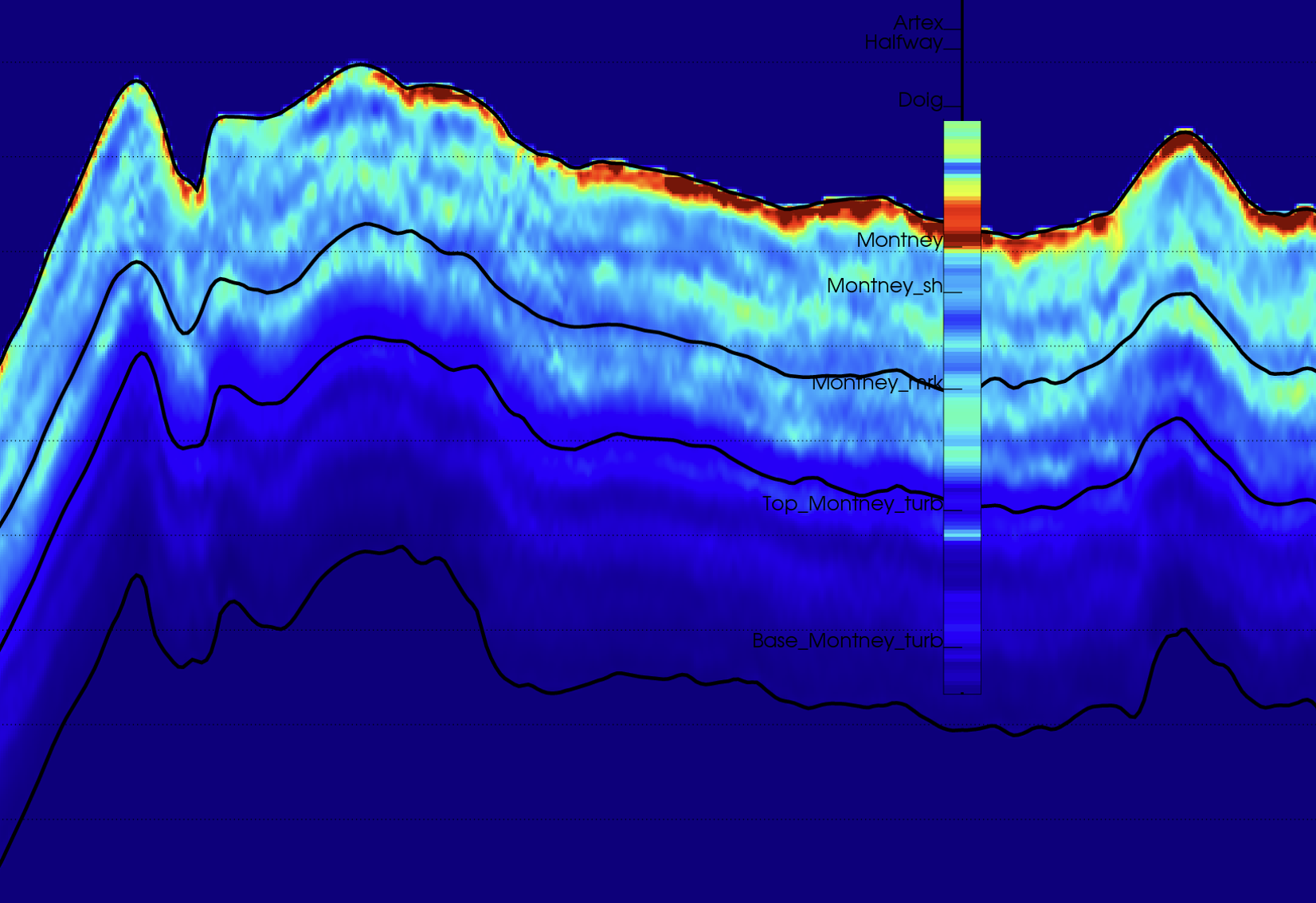

"Rock physics inversion takes us beyond the elastic domain, translating acoustic impedance, Vp/Vs and density into reservoir properties such as clay volume, porosity and saturation, constrained by calibrated rock physics and well data."
The rock physics inversion is based on an estimated rock physics model in order to provide deterministic estimates of key reservoir properties from seismic derived elastic properties. Therefore it implicitly assumes that any variation in petrophysical properties is fully explained by variations in elastic properties. The non-uniqueness; the fact that several combinations of mineral fractions, porosities and hydrocarbon saturations yield an identical elastic response, is resolved by using a priori correlations and background models.
The derived rock physics model in task 3 can be used to perform a rock physics inversion of the baseline inversion results for rock properties such as for instance volume of clay, porosity and water saturation.
In order to resolve the non-uniqueness inherent to estimating three or more petrophysical parameters from typically two or three elastic parameters (the density may sometimes be used), an a priori covariance matrix between the petrophysical parameters can be estimated from well log data and be used as a soft constraint in the rock physics inversion. Prior models defining the background trends in the petrophysical properties can also be used.
Additionally, in the context of 4D, the rock physics inversion of the 4D seismic inversion result (acoustic impedance and Vp/Vs changes) can be inverted for relevant changes in e.g. saturations, porosity and/or effective stress.
As a part of the rock physics inversion for changes in key reservoir properties, additional constraints can be employed such as mass balance.