.svg)
Seismic data conditioning
Reliable inversion starts with well-conditioned data. We offer a full suite of in-house developed conditioning tools, including noise suppression, amplitude balancing, and seismic alignment, all designed specifically for AVO inversion applications with particular attention to amplitude and wavelet shape preservation.
To ensure a successful QI study we offer a full suite of seismic data conditioning tools to improve the quality of the input seismic data. These include various noise suppression techniques and other processes to get the data into a state that is suitable for inversion. Our seismic conditioning algorithms and our QC products are developed in-house specifically for AVO inversion applications. All of our techniques pay particular attention to amplitude and wavelet shape preservation during conditioning.

Seismic CDP gathers conditioning
- Depth to Time
- FK filter
- Cadzow type fxy filtering
- Radon
- Residual moveout (RMO)
- NMO de-stretch
- Offset gathers to angle stacks
Seismic angle stack conditioning
- Q-compensation
- NMO stretch compensation
- FXY
- Residual noise suppression
- Amplitude balancing, typically if there are facies in the overburden reducing the amplitude level at the target interval.
- Spectral balancing, or matching, typically if the angle stacks are needed for other workflows not involving inversion.
- Re-phasing, typically to ensure zero-phased seismic data (this is not critical for the inversion workflow).
- Footprint removal
- Seismic alignment (Azimuthal, AVO and 4D alignment)
- Other suggestions as deemed valuable

“Even the most advanced inversion cannot recover information that has been distorted in the seismic data. That's why robust, amplitude-preserving pre-conditioning is fundamental to everything we do.”
Qeye's Seismic Warping
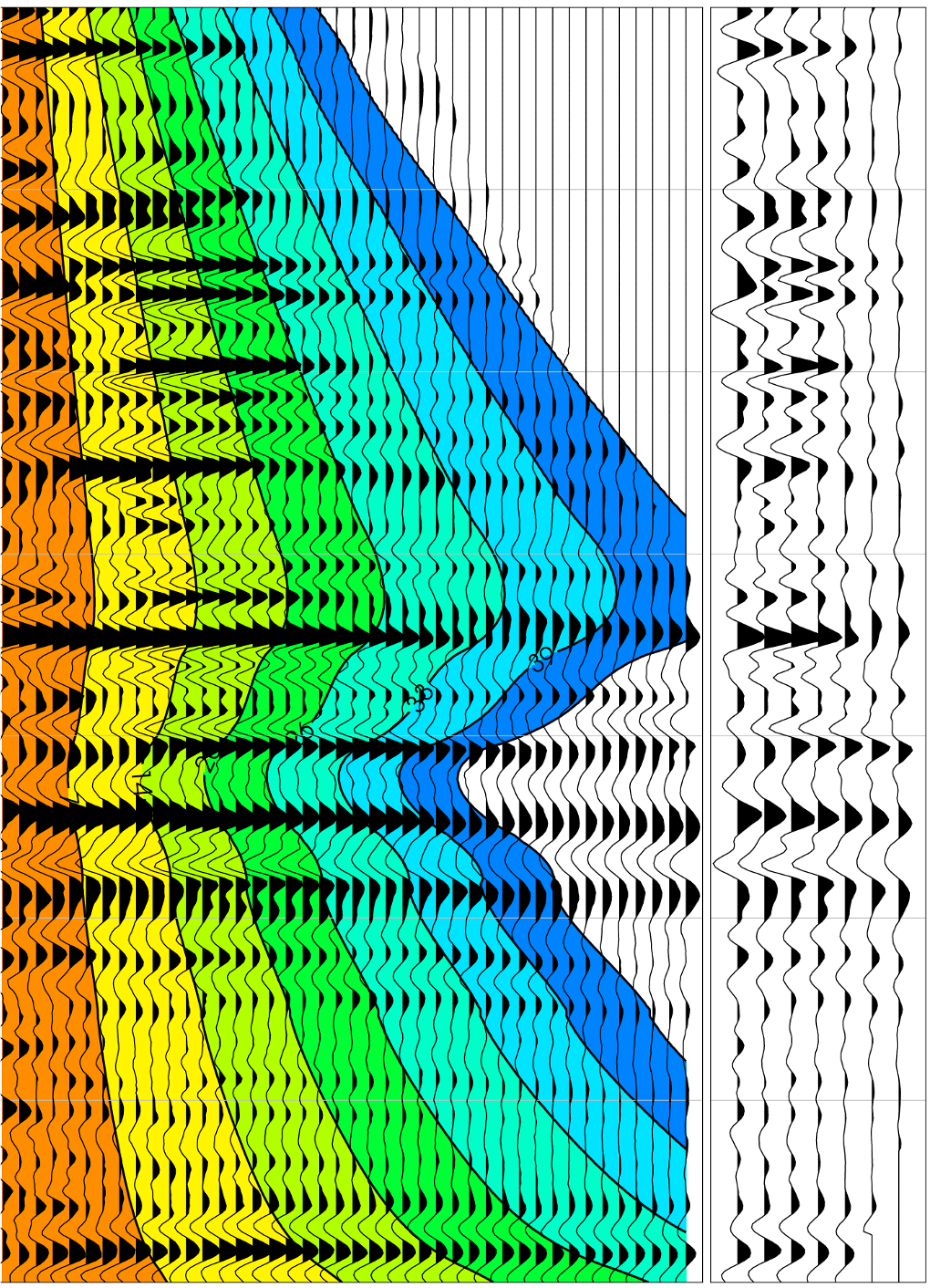
Seismic warping or alignment is an essential tool within the seismic quantitative interpretation workflow.
Applications include:
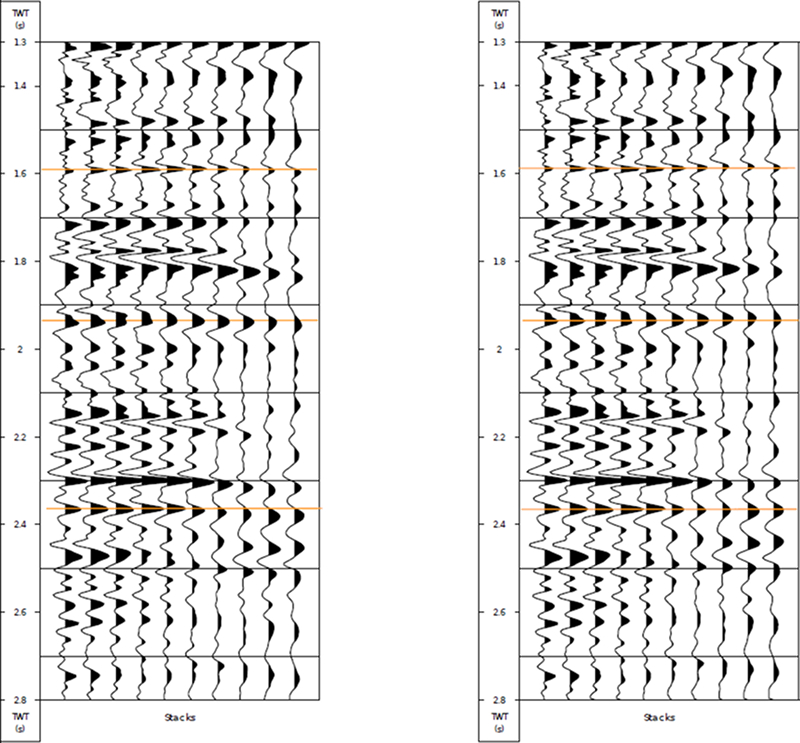
- Angle stack warping suppresses seismic event misalignment originating from inaccurate velocity modeling or migration (Figure 1)
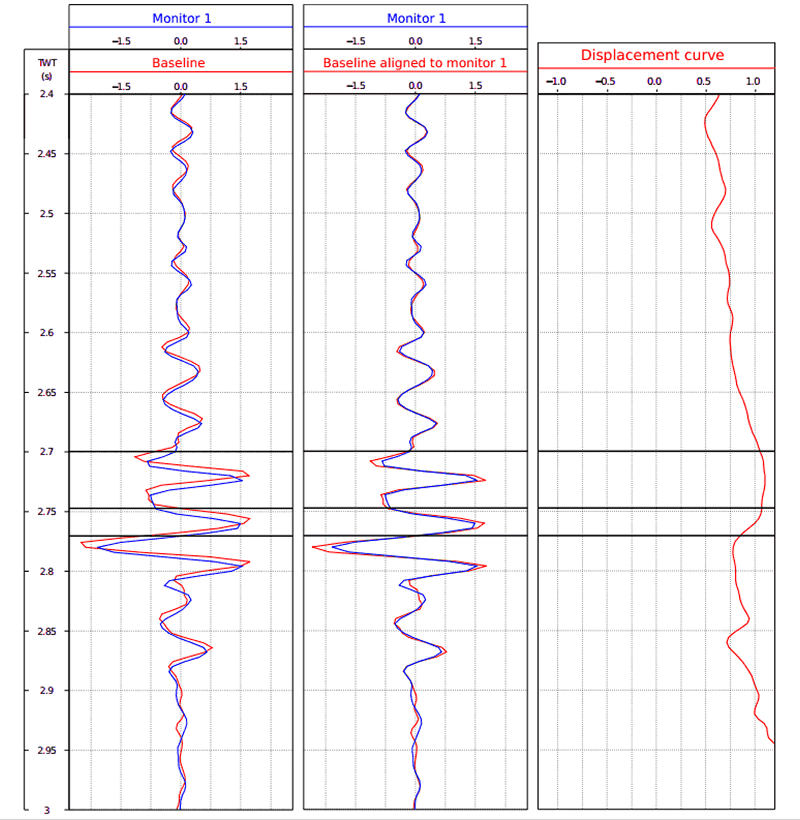
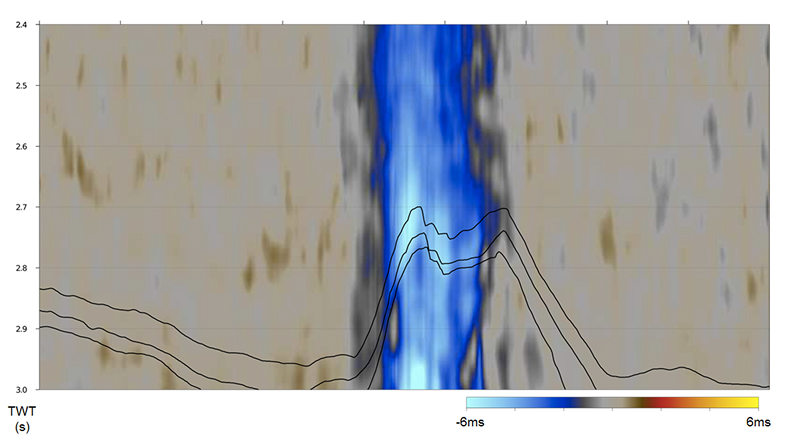
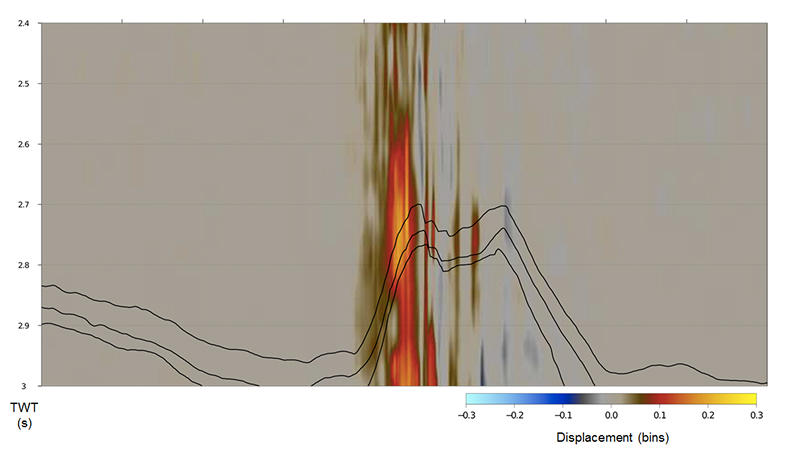
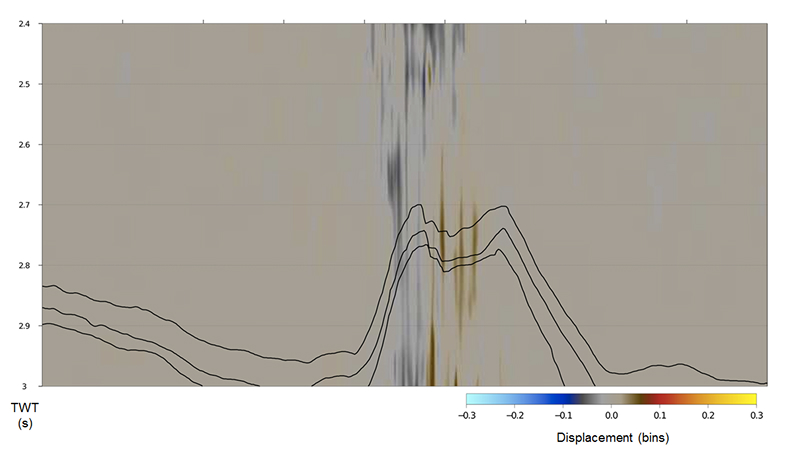
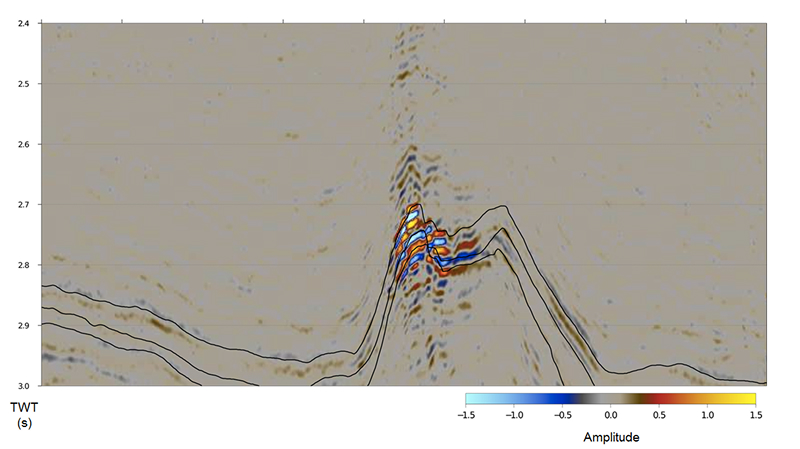
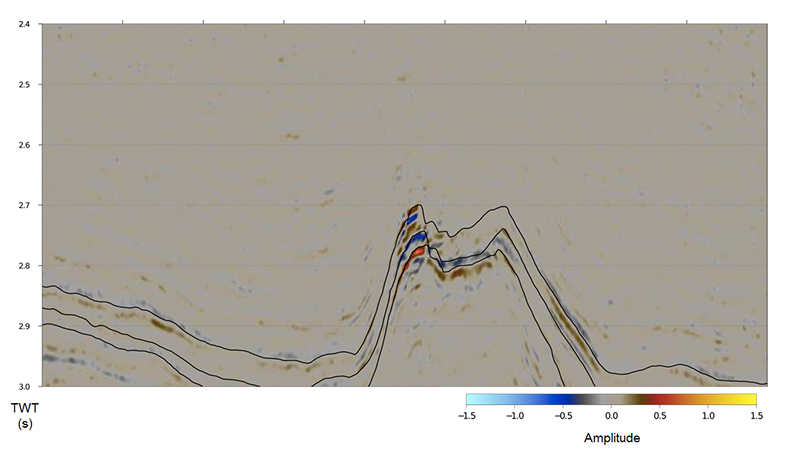
- 4D warping estimates time shifts that arise from velocity changes due to production and/or compaction (Figures 2 to 5)
- 4D warping suppresses lateral positioning errors associated with velocity changes and migration across structural features (Figure 4)
- 4D warping is essential to estimate the geomechanical effects within and around the reservoir arising from hydrocarbon production
Our warping algorithm has the following key features:
- 1D and 3D warping with optional geological dip constraints
- Displacement cube is optimized both locally and globally
- Amplitude preserving – making it suitable for AVO inversion
- The computed displacement field can be used as a constraint in the 4D inversion